
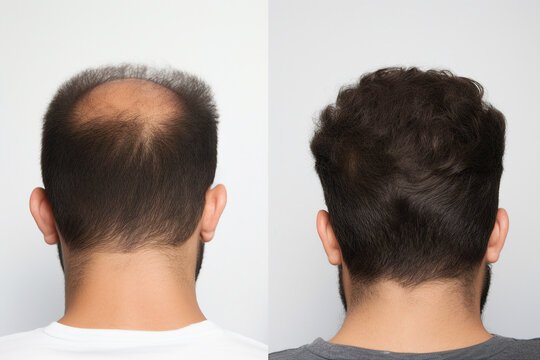
Hair replacement vs hair transplant are two different approaches to addressing hair loss, and understanding how they differ can help you explore the option that may be more suitable for your needs.. Although both aim to improve the appearance of thinning or missing hair, they work in very different ways.
Understanding the difference between hair replacement and hair transplantation can help you have a more informed conversation with a qualified professional about which option may suit your individual needs.
What Is Hair Replacement?
Hair replacement is a non-surgical approach designed to improve the appearance of areas affected by hair loss, thinning hair or bald patches.
A professionally fitted hair replacement system can be designed to blend with your existing hair and create a natural-looking appearance. Depending on the individual’s needs, the system can be customised for factors such as hair colour, density, length and hairstyle.
Because it is a non-surgical solution, there is no surgical procedure involved.
What Is a Hair Transplant?
A hair transplant is a surgical procedure in which hair follicles are taken from one area of the scalp and transplanted into areas affected by hair loss.
Common transplant techniques include procedures such as FUE (Follicular Unit Extraction) and FUT (Follicular Unit Transplantation).
A hair transplant requires a medical assessment to determine whether someone is an appropriate candidate. Results also depend on factors such as donor hair availability, the pattern of hair loss and individual healing.
For general information about hair transplant procedures, you can also refer to the NHS hair transplant guidance.
Hair Replacement vs Hair Transplant
The main difference is the approach.
Understanding hair replacement vs hair transplant can help you compare a non-surgical hair system with a surgical procedure and decide which approach is worth discussing with a qualified professional.
Hair replacement:
A non-surgical solution that uses a customised hair system to create the appearance of fuller hair.
Hair transplant:
A surgical procedure that moves hair follicles from one area of the scalp to another.
Neither option is automatically the right choice for everyone. Your choice should depend on your hair-loss pattern, expectations, lifestyle, budget and professional assessment.
Which Option Gives a Faster Visible Change?
One of the reasons people consider hair replacement is that it can provide a visible change without waiting for transplanted follicles to grow.
Hair transplant results, on the other hand, develop over time. Following a transplant, the transplanted follicles need time to grow and the final appearance may take months to develop.
If your priority is a non-surgical solution with an immediate change in appearance, hair replacement may be worth discussing with a professional.
Is Hair Replacement Suitable for Everyone?
Hair replacement can be considered for people experiencing different forms of visible hair loss, including thinning hair, receding hairlines and bald patches.
The right design and fitting depend on the individual’s existing hair, scalp condition, lifestyle and desired appearance.
A consultation is important before choosing a solution because hair loss can have many different causes.
Is Hair Transplant Suitable for Everyone?
Not everyone experiencing hair loss is automatically a suitable candidate for transplantation.
A medical professional may consider factors such as the cause and pattern of hair loss, donor hair availability, scalp condition and overall expectations before recommending a transplant.
For this reason, anyone considering a hair transplant should seek an appropriate medical evaluation.
How Do You Choose Between Hair Replacement and Hair Transplant?
When comparing hair replacement vs hair transplant, consider your hair-loss pattern, expectations, lifestyle, budget and whether you prefer a non-surgical or surgical approach.
- Do you prefer a non-surgical solution?
- Are you looking for a change in appearance without waiting for new hair growth?
- Do you have sufficient donor hair for a transplant?
- What type and pattern of hair loss do you have?
- What level of maintenance fits your lifestyle?
- What are your expectations for the final appearance?
A consultation can help you understand your available options rather than choosing based only on advertisements or before-and-after photographs.
Why Professional Consultation Matters?
Hair loss is different for every person. A solution that works well for one individual may not be appropriate for another.
At Hair Bond Studio, consultations focus on understanding your hair-loss concerns and discussing suitable non-surgical hair replacement options based on your individual needs.
The goal is to create a comfortable, natural-looking result that fits your appearance and lifestyle.
Frequently Asked Questions
Is hair replacement the same as a hair transplant?
No. Hair replacement is a non-surgical approach that uses a hair system, while a hair transplant is a surgical procedure involving the transplantation of hair follicles.
Does hair replacement require surgery?
No. Hair replacement is a non-surgical hair restoration option.
Does a hair transplant give immediate results?
No. Hair transplant results develop gradually as transplanted follicles grow, so the final appearance takes time.
Which is better, hair replacement or hair transplant?
There is no single option that is best for everyone. The appropriate choice depends on your hair loss, expectations, donor hair availability, lifestyle and professional assessment.
Can I discuss hair replacement before deciding on a hair transplant?
Yes. A consultation can help you understand the available non-surgical options before making a decision.
Explore Your Hair Replacement Options
If you’re experiencing thinning hair, a receding hairline or visible hair loss, speak with the team at Hair Bond Studio to understand your non-surgical hair replacement options.
Book a consultation and discuss a solution designed around your hair and lifestyle.
Leave a Reply